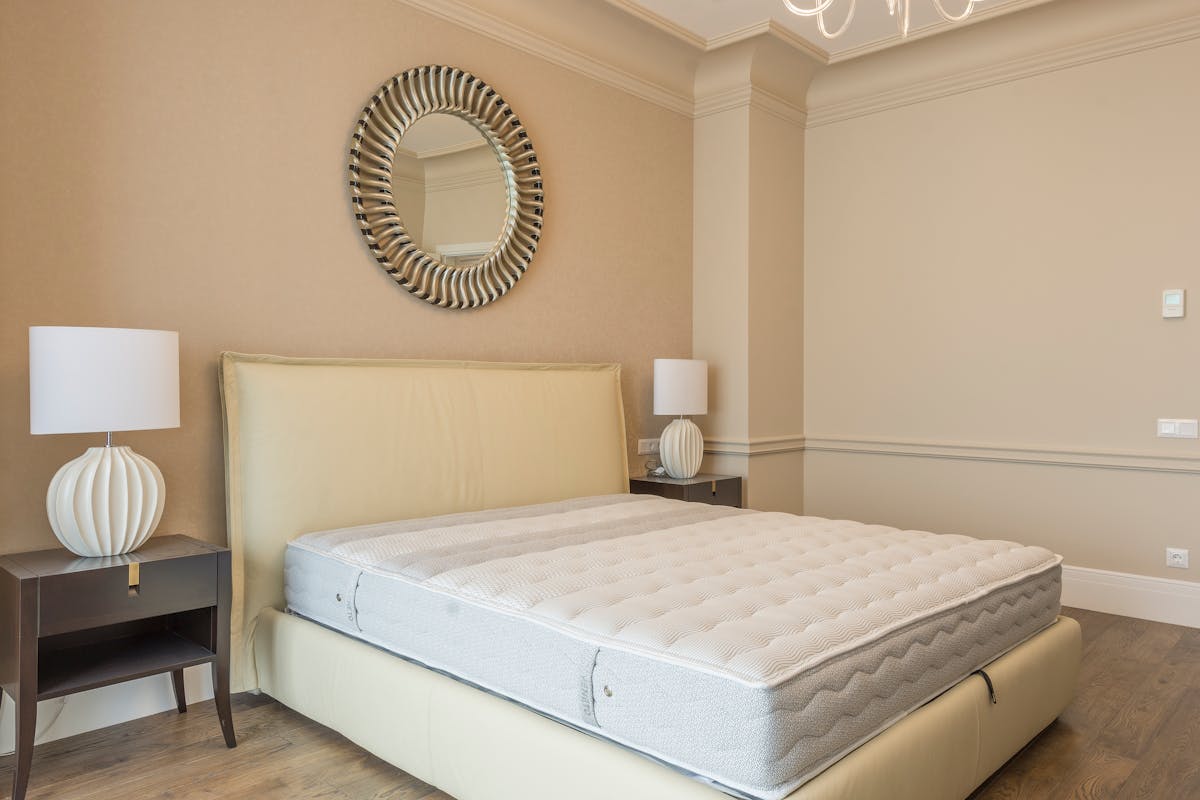
Bed bugs (Cimex lectularius) can survive six to twelve months or more without feeding in cool, dry conditions, and hide within about a metre and a half of wherever a host sleeps: mattress seams, box-spring joints, headboard cracks, outlet covers, and baseboard gaps. That biology is constant across every borough and every building type — what changes citywide is how they arrive and spread.
In multi-unit buildings, an untreated adjacent apartment or the floor above or below can reinfest a just-treated unit within weeks, travelling through wall voids the same way mice do. Laundromat exposure via shared machines is a commonly underestimated transmission path, and kerbside or secondhand furniture is another frequent source citywide. Hotel stays get blamed often, but in dense NYC housing the more common source is building-to-building spread, not a single travel incident.
We combine chemical treatment — a pyrethroid/pyrethrin combination, heat-assisted with a steamer on seams before spraying — with mattress and box-spring encasements on every job, and recommend heat treatment for severe infestations where repeated chemical visits aren't practical. NYC's Local Law 69 (Admin Code §27-2018.1) requires landlords to disclose a unit's bed bug history to incoming tenants and to investigate and remediate within 30 days of notice — our documented treatment record is what satisfies that obligation.
What should New Yorkers know before booking bed bug treatment?
New York City requires building owners to disclose a unit's bed bug infestation history to incoming tenants and to file an annual bedbug report — so documented, professional treatment protects tenants and owners alike. (NYC Housing Preservation & Development)
Heat kills bed bugs at every life stage: the US EPA notes steam must reach at least 130°F (54°C) to be effective — the same lethal-temperature principle professional whole-room heat treatments rely on, which is why they can clear an infestation eggs included in a single visit. (US EPA — bed bug control)
The common bed bug (Cimex lectularius) spreads through shared walls, second-hand furniture and luggage rather than dirt or poor hygiene — which is why infestations in well-kept NYC apartments are routine, and why treating a single room rarely ends a building-level problem. (Cimex lectularius — Wikipedia)
Heat treatment vs conventional insecticide — which is right for your apartment?
| Whole-room heat | Conventional insecticide | |
|---|---|---|
| Kills eggs on first visit | Yes — heat is lethal to all life stages | No — follow-up visits target newly hatched bugs |
| Typical visits required | Usually one full-day treatment | Two to three visits, 10–14 days apart |
| Preparation burden | Heat-sensitive items removed; most belongings stay | Laundering, bagging and decluttering required |
| Best suited to | Heavy or building-spread infestations | Light, early-caught infestations |
| Residual protection | None once the room cools | Residual products keep working between visits |
How much does bed bug treatment cost in NYC?
$300–$4,000
Per room (chemical): $300–$600. Per whole apartment (heat): $1,500–$4,000. National per-job average: $145–$500 (Bob Vila) to $1,000–$4,000 whole-home (aggregator synthesis).
| Chemical treatment | $300–$600 per room |
| Heat treatment | $1,500–$4,000 per apartment |
Market range — not our quote
This is a market range synthesised from published cost guides — not a quote from this provider. The actual price depends on an in-person or photo-based inspection.
The NYC per-room/heat figures come only from tier-2 NYC pest-industry blogs; the national anchor (Bob Vila $145–$500) is markedly lower, suggesting NYC-specific multi-visit chemical or heat jobs are being compared against a simpler national per-visit figure. Wide spread — verify against a real local quote before treating as a firm number.
What drives the price
- Chemical (multi-visit, cheaper per visit) vs heat (single visit, higher upfront)
- Apartment size / room count
- Severity and spread of infestation
- K9 inspection add-on for post-treatment clearance
Signs you have a bed bug control problem
- Itchy bites appearing in a line or cluster after sleeping
- Rust-coloured spots on sheets, mattress seams, or the headboard
- Live bugs visible in mattress seams, box spring joints, or behind the headboard
- Small pale eggs or shed skins tucked into furniture crevices or outlet covers
- A recent stay involving shared laundry, secondhand furniture, or an adjacent unit's known infestation
Why New York sees this
New York City's bed bug pressure is driven by building-to-building spread through shared wall voids and risers, a pattern that holds across pre-war walk-ups, post-war elevator buildings, and everything in between — not a single neighbourhood's housing stock.
NYC's bed bug disclosure law (Local Law 69 of 2017 / Admin Code §27-2018.1) requires landlords to disclose a unit's bed bug history for the prior year at lease signing and to investigate and remediate within 30 days of notice.
DOHMH maintains a public bed bug complaint dataset citywide — treatment documentation from a licensed exterminator is what a landlord or tenant relies on to meet that disclosure and remediation obligation.