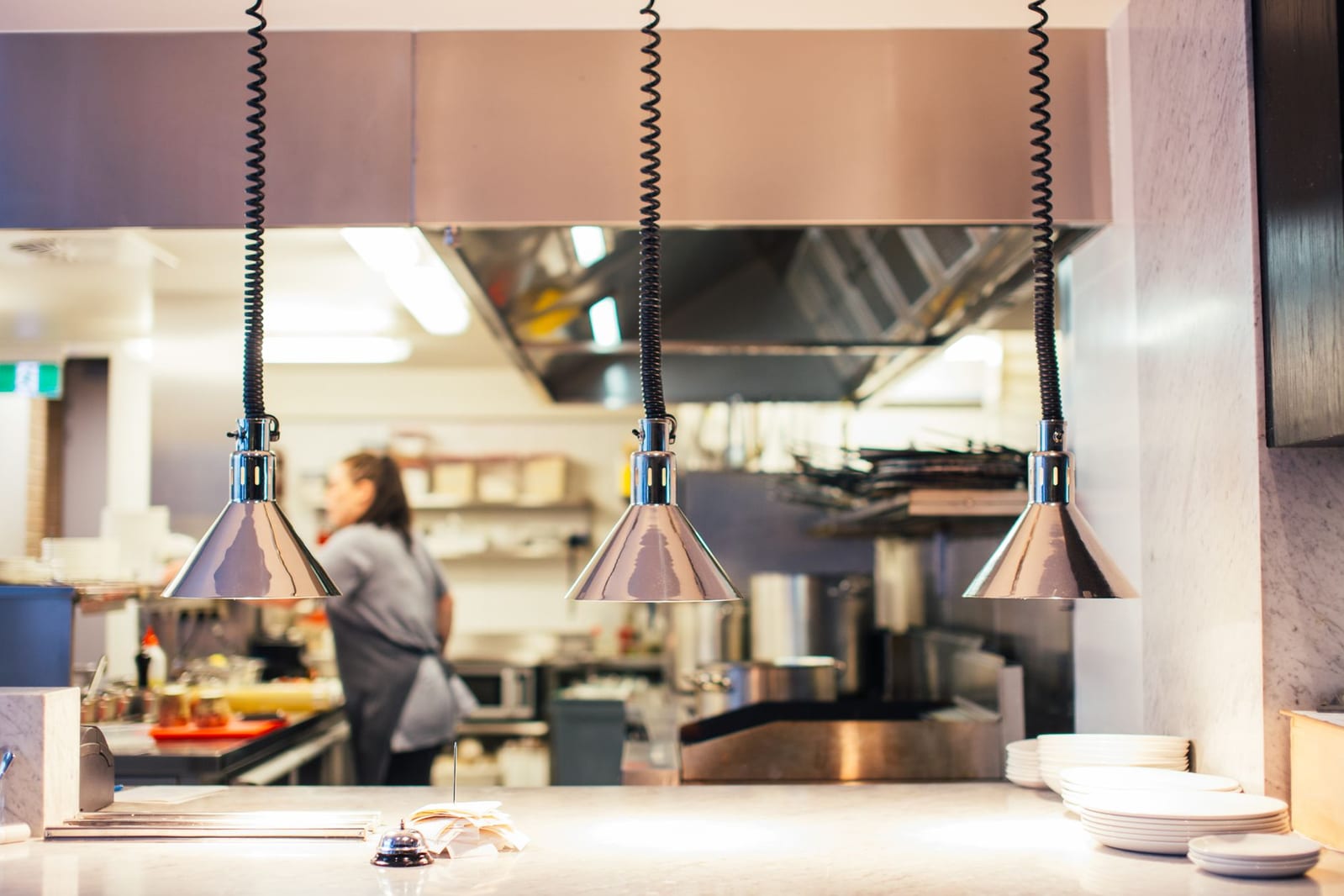
A New York City restaurant's pest program has to satisfy two things at once: an actual pest-free kitchen, and a documented record DOHMH will accept at inspection. German cockroaches near food storage, water bugs from a floor drain, or rodent activity anywhere on the premises all fall under specific violation categories in the health code, and a C-grade or worse hits revenue immediately.
Gel bait protocols address German cockroaches at the source rather than dispersing them with a broadcast spray a customer-facing space can't tolerate the smell of. Insect light traps (ILT) handle flying insects without visible chemical application in dining areas. Where a restaurant has a water-bug problem, the fix is at the drain and basement level, since that's where American and Oriental cockroaches actually live — not a spray in the kitchen where one was seen.
Across all five boroughs, restaurant pest accounts are set on a monthly preventive schedule as standard practice, because the cost of a failed inspection or a customer sighting is disproportionate to the cost of prevention. We keep a documented file for every visit specifically because DOHMH inspections ask for it.
NYC restaurant pest-control rules every operator should know
Since 2010 the NYC Health Department has required restaurants to post a letter grade tied to sanitary-inspection points: 0 to 13 points is an A, 14 to 27 is a B, and 28 or more is a C, with the grade card posted where passers-by can see it. Live mice, rats or roaches are scored as vermin conditions, so an infestation can push an otherwise-passing kitchen into a B or C. (NYC DOHMH — Letter Grading for Restaurants)
The FDA Food Code that NY and NYC adopt requires, in section 6-501.111, that the premises be kept free of insects, rodents and other pests, controlled by routinely inspecting incoming shipments, routinely inspecting the premises for evidence of pests, using trapping or other methods when pests are found, and eliminating harborage — the core of a documented Integrated Pest Management programme. (US FDA Food Code §6-501.111 — Controlling Pests)
FDA Food Code section 6-202.15 requires that outer openings of a food establishment be protected against the entry of insects and rodents — using self-closing doors, screening, air curtains or sealed gaps. This exclusion-first expectation is why professional service in NYC restaurants pairs treatment with structural proofing rather than spraying alone, and why service reports should document those corrections. (US FDA Food Code §6-202.15 — Outer Openings, Protected)
Every NYC restaurant gets at least one unannounced sanitary inspection a year, and inspectors record points for any vermin evidence. Documented professional service with dated trap logs, monitoring records and corrective-action notes is the evidence that demonstrates an ongoing programme to an inspector, supports the FDA Food Code's routine-inspection requirement, and helps protect a hard-won A grade. (NYC DOHMH — Letter Grading for Restaurants)
How vermin findings map to a posted NYC letter grade
| Total inspection points | Posted grade | What it signals |
|---|---|---|
| 0–13 | A | Compliant — minimal or no vermin evidence at inspection |
| 14–27 | B | Conditions found — live pest evidence commonly contributes |
| 28 or more | C | Serious or repeated conditions — active infestation a frequent driver |
How much does restaurant pest control cost in NYC?
$35–$4,000
Monthly contract: $75–$150/visit (broad commercial range $35–$2,000+/month depending on facility size). Restaurant-specific treatment: $150–$500/visit. Annual ongoing commercial service: $600–$4,000/year.
| Monthly contract | $75–$150 per visit |
| Restaurant-specific treatment | $150–$500 per visit |
| Annual ongoing service | $600–$4,000 per year |
US national figure — NYC typically runs higher.
Market range — not our quote
This is a market range synthesised from published cost guides — not a quote from this provider. The actual price depends on an in-person or photo-based inspection.
Thin sourcing — these are industry/trade-service blogs (pest-control software vendors and a single pest-control company), not tier-1 consumer cost-aggregators; no NYC-specific commercial/restaurant figure found. Treat this range as indicative only.
What drives the price
- Facility size/type (restaurant vs warehouse vs office)
- Service frequency (quarterly acceptable for low-risk; monthly typical for high-traffic food service)
- Health-code/documentation requirements (IPM program documentation for food-service tenants)
- Regulatory strictness for food-handling environments
Signs you have a restaurant pest control problem
- Cockroaches or droppings found in food-storage or food-prep areas
- Water bugs surfacing from a floor drain in the kitchen or basement
- Rodent droppings or gnaw marks anywhere on the premises, including storage and waste areas
- A recent DOHMH inspection flagging a pest-related violation
- Flying insects near dining areas without an existing ILT program
Why New York sees this
DOHMH's A/B/C/Grade Pending letter-grading system makes pest control a direct revenue issue for restaurants citywide, and cockroaches in food-prep or storage areas fall under a specific violation category in the health code.
American and Oriental cockroaches ('water bugs') enter restaurant kitchens from sewer and drain systems, not primarily from food-storage conditions — a restaurant pest program has to treat both sources separately.
Monthly preventive service with documented visit records is the standard across NYC restaurant accounts, because a failed inspection or a customer-facing sighting costs more than ongoing prevention.